
AI Integration services
AI integration services involve seamlessly embedding artificial intelligence technologies, such as machine learning (ML), natural language processing (NLP), and generative AI, into a business's existing IT systems, applications, and workflows. The primary goal is to enhance functionality, automate processes, and improve decision-making without requiring a complete overhaul of the existing infrastructure.
How AI Integration Works with Current IT Services
AI integration typically works through a combination of APIs (Application Programming Interfaces), middleware, and pre-built plugins to connect AI models with existing systems like Customer Relationship Management (CRM), Enterprise Resource Planning (ERP), and Business Intelligence (BI) tools.
Key aspects of this integration include:
- Data Preparation and Management: AI systems need access to high-quality, structured data to learn effectively. Integration services ensure that data from various sources is clean, unified, and available to the AI models.
- API Integration: Pre-built AI models (e.g., from AWS AI Services, Microsoft Azure AI, or Google Cloud AI) are connected to current software using APIs to perform specific tasks like speech recognition or data analysis.
- Custom Model Deployment: For unique business needs, custom AI models are developed and deployed within the existing IT infrastructure, often using cloud-based platforms.
- Automation of Workflows: AI is used to automate repetitive tasks and entire end-to-end processes, allowing human employees to focus on more strategic work.
Benefits to IT Services
Integrating AI with existing IT services transforms traditional operations, making them more intelligent, efficient, and resilient.
- Operational Efficiency and Automation: AI automates routine IT tasks like incident routing, password resets, and software updates, reducing the manual workload and potential for human error.
- Predictive Analytics: AI analyzes historical data to predict potential IT issues, security threats, or system outages before they occur, enabling proactive maintenance and minimizing downtime.
- Enhanced IT Service Management (ITSM): AI-powered chatbots and virtual agents provide 24/7 support for common IT questions, improving response times and user satisfaction.
- Improved Cybersecurity: AI models monitor network activity and data patterns to detect anomalies and identify potential security breaches more quickly than traditional methods.
- Data-Driven Decision Making: AI analyzes massive volumes of data to uncover insights, patterns, and trends that inform better strategic decisions across the business.
Key Technologies Used
AI integration services leverage several core technologies to embed intelligence into existing systems:
- Machine Learning (ML): Algorithms that allow systems to learn from data and improve performance over time without explicit programming (e.g., for predictive maintenance or recommendation engines).
- Natural Language Processing (NLP): Enables systems to understand, interpret, and generate human language for use in chatbots, document analysis, and data extraction.
- Robotic Process Automation (RPA): Used in conjunction with AI to automate rule-based, repetitive digital tasks.
- Computer Vision: Allows machines to "see" and interpret visual data, used in areas like quality control in manufacturing or monitoring IT infrastructure in data centers.
- Generative AI: Capable of creating new content, such as text, images, or code, and is integrated to automate content creation and personalize customer experiences.
Please find the AI Integration services use cases below:
Customer service and support
- AI-powered chatbots: Integrate with customer relationship management (CRM) systems to handle frequently asked questions and order tracking, with human agents taking over more complex issues.
AI-powered chatbots are used across various industries, from e-commerce to finance, to provide instant, 24/7 customer support.
Well-Known Software Platforms
Many businesses use dedicated customer service platforms that incorporate AI chatbot functionality.
- Zendesk AI: Offers autonomous AI agents trained on billions of support interactions, with features like intelligent ticket routing and sentiment analysis.
- Intercom Fin AI: An AI assistant that learns from a company's help documentation to provide natural, conversational support and seamless handover to human agents.
- Ada: A no-code platform designed for large-scale automation, allowing non-technical teams to build customized, multilingual bots that integrate with major CRMs and e-commerce platforms.
- Tidio: Features the Lyro AI chatbot, which is ideal for small to medium-sized e-commerce businesses needing quick setup and integration with platforms like Shopify and WordPress.
- HubSpot Chatbot Builder: Integrates directly with the HubSpot CRM, allowing for personalized responses based on customer data and lead qualification workflows.
- Freshchat: Part of the Freshworks suite, it uses Freddy AI to detect customer intent and provide multichannel support, including on WhatsApp and Messenger.
Our 10 Benefits
This whitepaper will evaluate the differences between traditional technical support practices and modern managed IT practices and the pros and cons of both in regards to small and medium-sized businesses.
AI Integration Questions?
Examples from Specific Companies
Major brands and companies utilize custom or vendor-based AI chatbots to streamline operations and enhance customer experience.
- Bank of America's Erica: An advanced voice and text-based virtual financial assistant that helps customers with account management, bill payments, and spending insights via their mobile app.
- Klarna's AI Assistant: A custom-built AI assistant that handles two-thirds of customer service chats, achieving the workload equivalent of 700 full-time agents.
- KLM's BlueBot: Assists customers on platforms like Facebook Messenger and WhatsApp with flight bookings, check-ins, and real-time updates, handling twice the number of bookings through the bot.
- H&M's Chatbot: Acts as a virtual styling assistant on the Kik messenger app, asking about preferences to recommend products and help drive sales.
- Spotify's Real-Time Translation: Uses AI for real-time conversation translation, enabling support agents and customers to communicate seamlessly across over a dozen languages.
- Lush Cosmetics: Implemented an AI agent to handle common inquiries, saving approximately five minutes per ticket and 360 agent hours each month, allowing human staff to focus on complex cases.
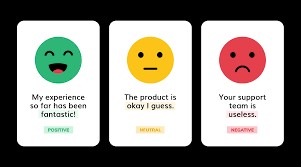
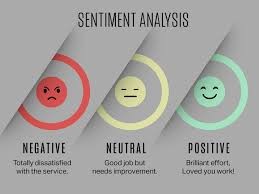
- Sentiment analysis: Apply NLP to analyze customer feedback from various channels to gauge sentiment about products and services.
Sentiment analysis, also known as opinion mining or emotion AI, is the process of using Natural Language Processing (NLP) and machine learning to systematically identify, extract, and quantify subjective information from text data. Its primary goal is to determine whether the emotional tone of a message is positive, negative, or neutral.

How Sentiment Analysis Works
Sentiment analysis transforms unstructured text data (like reviews, social media posts, or emails) into structured, measurable insights through a series of steps:
- Data Collection Textual data is gathered from various sources, such as social media, surveys, customer support interactions, and online reviews.
- Data Preprocessing The raw text is cleaned and normalized. This involves tokenization (breaking text into words/phrases), removing irrelevant information (stop words, special characters), and lemmatization (reducing words to their root form).
- Feature Extraction/Keyword Analysis NLP techniques are used to analyze relevant keywords or phrases and assign a sentiment score or weight to them.
- Sentiment Classification Algorithms (rule-based, machine learning, or hybrid) classify the text based on the extracted features and scores, typically into positive, negative, or neutral categories.
- Output and Scoring The final result is a sentiment label or a numerical score (e.g., on a scale of -1 to +1) that indicates the overall emotional polarity and intensity of the text.
Types of Sentiment Analysis
Different approaches provide varying levels of detail depending on the needs of the analysis:
- Fine-Grained Analysis Classifies sentiment on a detailed scale (e.g., very positive, positive, neutral, negative, very negative), useful for measuring the intensity of emotion.
- Aspect-Based Analysis (ABSA) Evaluates the sentiment toward specific entities or features within a text (e.g., "The location was perfect, but the breakfast was disappointing" would tag 'location' as positive and 'breakfast' as negative).
- Emotion Detection Aims to identify specific emotions like anger, joy, frustration, sadness, or excitement, rather than just general polarity.
- Intent-Based Analysis Goes beyond emotion to uncover the whybehind a message, such as whether a customer is complaining, asking for help, or expressing purchase intent.
Common Use Cases
Businesses use sentiment analysis across various departments to make data-informed decisions:
- Brand Monitoring Public relations teams track real-time mentions and chatter about their brand on social media and forums to manage reputation and respond to potential crises.
- Customer Service Improvement Support teams can automatically route urgent or highly negative support tickets to human agents for prompt resolution, improving overall customer satisfaction.
- Product Development Product teams use feedback analysis to pinpoint which features or aspects of a product customers like or dislike, guiding future improvements.
- Market Research & Competitive Analysis Companies analyze competitor reviews and industry trends to identify pain points, spot new opportunities, and refine their own market positioning.
- Employee Feedback Analysis HR departments use sentiment analysis on internal surveys and communications to understand employee morale and address workplace issues like burnout or dissatisfaction.
Challenges
Despite advancements in AI, human language presents challenges for automated systems, including:
- Sarcasm and Irony Using positive words to express a negative meaning (e.g., "Oh, just wonderful—another delay") is difficult for models to interpret correctly without significant contextual data.
- Context Sensitivity The meaning of a word can change based on the surrounding text (e.g., "thin" is positive for a laptop but negative for hotel walls).
- Negation Phrases involving negation (e.g., "not bad" actually meaning good) can confuse basic models.
- Mixed Sentiments A single review may contain both positive and negative opinions (e.g., "Great camera but poor battery life"), requiring sophisticated aspect-based analysis to avoid a misleading "neutral" overall score.
Operations and IT management
- Predictive monitoring: Use AI to analyze logs and performance data to detect anomalies and potential failures before they impact users, which can prevent downtime.
AI integration services with predictive monitoring are widely used across various industries to forecast future events, optimize operations, and mitigate risks proactively. These services leverage machine learning, data analysis, and IoT data to identify patterns and predict outcomes.
Key Application Areas and Examples
Here are examples of how AI integration services with predictive monitoring are used in different sectors:
- Manufacturing & Industrial Operations (Predictive Maintenance)
- Function: AI models analyze real-time data from Internet of Things (IoT) sensors (vibration, temperature, pressure) on machinery to predict when equipment failure is likely to occur.
- Examples of Services/Companies:
- IBM Watson IoT offers solutions to predict the failure of instrumented assets and optimize maintenance schedules.
- Siemens uses AI-based software to monitor industrial machinery like turbines and compressors, providing advance alerts for potential issues.
- General Electric (GE) Digital employs "Digital Twins" (virtual models of physical assets) to predict and prevent downtime of critical equipment.
- Penske Truck Leasing uses AI and telematics in the cloud to monitor its fleet of trucks in real-time, flagging mechanical issues early.
- Financial Services (Fraud Detection & Risk Management)
- Function: AI systems analyze transaction patterns in real-time to spot anomalies that indicate fraudulent activity or cyber threats.
- Examples:
- PayPal uses AI and machine learning to scan millions of transactions per second, reducing missed fraudulent transactions significantly.
- Financial institutions use predictive models to assess credit risks and determine insurance premiums by analyzing customer data.
- Healthcare (Patient Outcomes & Operational Efficiency)
- Function: AI analyzes clinical and patient data to predict health risks (e.g., disease onset, readmission risk) and optimize hospital resources.
- Examples:
- Remote patient monitoring (RPM) services use AI to continuously track vital signs from wearable devices, alerting doctors to abnormal readings for early intervention.
- Hospitals use AI to forecast patient volumes, helping manage staffing, bed availability, and supplies more efficiently.
- Retail & Supply Chain (Demand Forecasting & Inventory Optimization)
- Function: AI models forecast product demand, optimize inventory levels, and streamline logistics by considering market trends, historical sales, and external factors.
- Examples:
- Wayfair uses predictive AI for personalization, tailoring the e-commerce experience to individual preferences.
- Companies use AI for dynamic pricing, adjusting product prices in real-time based on demand and competitor activity.
- AI helps optimize shipping routes in logistics based on real-time conditions like traffic and weather, improving delivery times.
- Customer Experience & Marketing (Churn Prediction & Personalization)
- Function: Businesses use AI to predict which customers are likely to leave (churn) and personalize marketing campaigns to retain them and increase engagement.
- Examples:
- Streaming services use predictive analytics to recommend content, keeping subscribers engaged.
- Telecom providers might proactively reach out to customers predicted to be unhappy with tailored offers or support.
- Workflow automation: Use AI to automate repetitive tasks, such as data entry or system-to-system data transfers, freeing up IT staff for more strategic work.
Workflow automation in IT services uses software to design, automate, and optimize repetitive and rules-based tasks and processes across an organization's IT infrastructure and applications. This approach aims to streamline operations, reduce human error, and free up IT teams to focus on more strategic work.
-
Key Benefits
Automating IT workflows offers significant advantages:
- Improved Efficiency and Speed: Automating repetitive tasks allows them to be completed faster and consistently, reducing bottlenecks and accelerating response times.
- Reduced Human Error: Rule-based automation ensures processes are executed consistently every time, minimizing the risk of manual mistakes inherent in data entry or handoffs.
- Cost and Time Savings: By streamlining operations and requiring less manual intervention, organizations can lower operational costs and save valuable employee time.
- Enhanced Visibility and Accountability: Workflow automation tools often provide real-time visibility into the status of processes, helping teams track progress, identify issues, and enforce accountability.
- Better Security and Compliance: Automated workflows help enforce security policies, manage access rights consistently, and maintain detailed audit trails for regulatory reporting.
-
Common Use Cases in IT
IT departments leverage workflow automation in various areas:
- Incident Management:Automatically creating tickets, notifying appropriate teams, assigning severity/priority, and tracking the resolution progress when an incident is reported.
- User Provisioning/Onboarding:Automating the process of creating new user accounts, setting up permissions, granting access to various systems and email distribution lists, and scheduling training.
- Cloud Infrastructure Management:Automating the consistent provisioning, configuration, and scaling of cloud resources based on demand.
- Patch Management & System Maintenance:Scheduling and deploying security patches and routine maintenance tasks (e.g., backups, log management) automatically.
- DevOps Pipelines:Orchestrating continuous integration/continuous deployment (CI/CD) pipelines by triggering builds, running automated tests, and deploying code across environments.
- Service Requests:Streamlining the handling and routing of common IT service requests, ensuring faster delivery and resolution.
-
Implementation Steps
A systematic approach to implementing IT workflow automation is crucial for success:
- Evaluate and Map Existing Processes:Identify manual, repetitive, or error-prone IT tasks that would benefit most from automation.
- Define the Workflow and Goals:Clearly outline the steps, triggers (e.g., a service ticket creation), and desired outcomes (e.g., reduced resolution time).
- Select the Right Tools:Invest in workflow automation software that offers necessary features like integration capabilities (APIs, pre-built connectors), scalability, and a user-friendly (often low-code) interface.
- Set Up the Automation:Use the chosen platform to configure the automated steps and conditional logic ("if/then" statements).
- Test, Monitor, and Optimize:Regularly test the automated workflow, track key performance indicators (KPIs) like error rates and cycle time, and make adjustments for continuous improvement.
- Intelligent logging: Use AI to make sense of large volumes of log data, helping to identify root causes of issues more quickly.
AI integration services with intelligent logging capabilities help streamline IT operations, security, and performance management by using machine learning to analyze large volumes of log data.
Key Use Cases of AI in Intelligent Logging
- Root-Cause Analysis (RCA) & Event Correlation:AI agents automatically correlate logs across different microservices, containers, and cloud regions during an incident to pinpoint the exact origin of a problem faster than manual methods.
- Anomaly and Threat Detection:AI learns the "normal" patterns of a system and flags unusual activities, such as sudden spikes in errors, suspicious login attempts from unusual geolocations, or data exfiltration, helping security teams detect threats proactively.
- Predictive Insights & Capacity Planning:By analyzing historical log data and trends in resource utilization, AI can forecast potential failures or bottlenecks. This allows teams to proactively allocate resources or scale infrastructure before performance degrades.
- Log Summarization & Intelligent Alerting:AI can condense massive volumes of log data into easily digestible summaries. It also reduces alert fatigue by applying intelligence to only flag critical issues, rather than relying on static, rule-based systems.
- Natural Language Queries (NLQ):AI makes log data more accessible by allowing users to search and interact with logs using plain English instead of complex query languages, simplifying troubleshooting for a wider range of team members.
- Intelligent ChatOps:AI agents can be integrated into collaboration platforms like Slack or Microsoft Teams to respond to real-time queries about logs or incidents, fostering a more conversational approach to incident management.
Examples of Platforms and Services
Several commercial and open-source platforms offer AI-powered intelligent logging features:
- Splunk(with ML Toolkit/ITSI):A leading commercial platform that uses AI and machine learning to uncover unusual patterns in real-time, reduce alert noise, and allow users to run searches in natural language.
- Datadog :A cloud-based monitoring and analytics platform that leverages AI for anomaly detection and forecasting, providing a comprehensive view of system performance across various integrations.
- New Relic :Offers a fully integrated "intelligent observability platform" with embedded AI capabilities for log management, aimed at resolving customer challenges within the user experience.
- Oracle Log Analytics (LoganAI):Oracle's AI capability for log analysis provides log summarization, actionable follow-up questions, and user-friendly explanations for large volumes of log data.
- ELK Stack (Elasticsearch, Logstash, Kibana) with AI Extensions:The popular open-source stack can be extended with machine learning features (like Elasticsearch's ML) to perform AI-powered anomaly detection.
Development and creative work
- Generative AI integration: Integrate tools like ChatGPT to assist developers in writing code, brainstorming ideas, or generating documentation.
Generative AI integration services are used across various industries to automate processes, enhance creativity, and improve decision-making. Key examples include customer service automation, content creation, product design, and internal process optimization.
Customer Service Automation
Generative AI enables more sophisticated and human-like interactions in customer support, reducing the need for human agents for routine tasks.
- Intelligent Chatbots:Companies like Klarna and Allstate use AI-powered chatbots to provide instant, 24/7 answers to customer inquiries, manage account details, and even guide users through complex processes like insurance claims or basic technical support.
- Agent Assist Tools:Internal AI tools, like those used by Telstra, summarize past customer interactions and retrieve relevant information in real-time to help human agents resolve issues faster and more efficiently.
Content Creation and Marketing
Generative AI streamlines the creation of marketing materials and personalized customer experiences.
- Product Descriptions:E-commerce platforms like Shopify and Amazonuse AI to automatically generate engaging and SEO-optimized product descriptions and review summaries from basic information or customer feedback.
- Personalized Marketing:The technology can tailor email campaigns and product recommendations to individual customer preferences and behaviors, boosting engagement and sales.
Product Design and Development
AI integration speeds up the design cycle and allows for the exploration of numerous design variations based on specific parameters.
- Automotive Design:Toyota and General Motors use generative AI to design new car shapes and dimensions, simulating real-world performance factors like aerodynamics and crash scenarios without physical testing.
- Creative Software:Adobe has integrated generative AI, such as Adobe Firefly, into its Creative Cloud suite (e.g., Photoshop) to enable users to create and edit images through text prompts, accelerating the creative process.
- Architectural Design:Bentley Systems uses generative AI to help architects design buildings and simulate how various changes would impact the infrastructure's performance.
Internal Process Optimization
Generative AI improves back-office operations by streamlining research, data analysis, and documentation.
- Financial Advising:Morgan Stanley implemented an AI tool that scans vast databases of financial data to summarize key trends for financial advisors, allowing them to provide more insightful advice in less time.
- Document Automation:Covered California automated its insurance claims verification process using generative AI to extract and verify data from documents, significantly improving verification rates and processing times.
- IT Support:Companies like Condor have developed internal AI assistants trained on historical IT tickets and documentation to provide immediate and accurate responses to employee IT inquiries, improving help desk efficiency.
- AI-powered assistant: Embed tools that can transcribe meetings, summarize key points, and even assign action items to participants.
AI-powered assistants are integrated with IT services through virtual agents, predictive analytics, and intelligent automation to streamline operations and enhance user experience. Major enterprise platforms like ServiceNow, Microsoft 365, and AWS all incorporate AI assistants to manage tasks within their ecosystems.
Examples of AI Assistant Integration in IT Services
Use Case
Description
Key Platforms & Tools
Automated Ticket Triage and Routing
AI analyzes incoming support tickets (via chat, email, or web portal) to automatically categorize, prioritize, and route them to the appropriate specialist team, reducing manual effort and speeding up resolution.
ServiceNow Now Assist, Zendesk AI, Moveworks, Jira Service Management
24/7 Virtual Support Agents/Chatbots
Conversational AI assistants provide instant, around-the-clock responses to common end-user inquiries and guide them through basic troubleshooting steps, such as password resets and software access requests.
Microsoft Copilot (in Teams), Amazon Q, IBM Watson Assistant, SysAid Copilot
Agent Assistance
AI tools integrated into helpdesk software provide human agents with real-time support by suggesting relevant knowledge articles, responses, and next steps based on the current ticket context, cutting down resolution time.
Salesforce Agentforce, Zendesk AI, Atera AI Copilot
Proactive Monitoring and Predictive Maintenance
AI analyzes system data and historical patterns to detect anomalies and predict potential outages or hardware failures before they occur, allowing IT teams to perform proactive maintenance.
BMC Helix, Atera, various network and security management AI tools
Knowledge Management Enhancement
Generative AI helps manage and update internal knowledge bases by drafting new articles from support interactions, summarizing complex documents, and improving contextual search for both users and IT staff.
Glean, Fluid Topics, Moveworks Knowledge Studio
Workflow and Task Automation
AI agents automate multi-step processes across different systems, such as employee onboarding (provisioning access, managing paperwork) or approval workflows, by integrating with enterprise applications.
Moveworks AI Assistant, Zapier Agents, IBM watsonx
Key Enterprise IT Platforms with AI Integration
- ServiceNow Now Assist:An AI assistant that provides generative AI support within the ServiceNow platform for tasks like ticket summarization and virtual agent interactions.
- Microsoft Copilot:Integrates across the Microsoft 365 suite (Teams, Outlook, etc.) to boost productivity, automate tasks, and provide contextual information access for employees.
- Amazon Q:An intelligent assistant for business users that connects to company data and systems to automate workflows, answer questions, and generate content within AWS services and enterprise applications.
- Moveworks:An enterprise-wide AI assistant that provides a unified conversational interface for employees to resolve IT, HR, and other internal support issues autonomously via platforms like Slack or Microsoft Teams.
- Jira Service Management:Incorporates AI for capabilities such as automated categorization and routing of IT requests.
Data analysis and security
- Predictive analytics: Integrate machine learning models with existing data warehouses to predict future trends, from sales forecasts to network traffic.
AI integration services embed AI capabilities into existing IT systems to enable predictive analytics for proactive decision-making and operational efficiency. These services use techniques like machine learning (ML), deep learning, and natural language processing (NLP) to analyze data and forecast future outcomes.
Examples of AI Integration in IT Services for Predictive Analytics
- Predictive Maintenance:AI models analyze data from IoT sensors in machinery (e.g., in manufacturing or fleet management) to predict potential equipment failures before they occur, allowing IT teams to schedule proactive maintenance and minimize costly downtime.
- Fraud Detection and Risk Management:AI is integrated into financial transaction systems to monitor user behavior and transaction patterns in real-time. The system flags anomalies that may indicate fraudulent activity, such as a large transfer overseas that deviates from usual behavior, enabling the IT security team to prevent breaches or attacks.
- Demand Forecasting and Inventory Management:Retail and supply chain IT services integrate AI to forecast product demand by analyzing historical sales data, market trends, seasonality, and external factors like weather. This helps optimize inventory levels and supply chain logistics, avoiding overstocking or shortages.
- Customer Churn Prediction:AI is embedded in Customer Relationship Management (CRM) systems to analyze customer interaction data, usage patterns, and feedback to predict which customers are likely to leave. The IT service can then trigger targeted, personalized offers or support to retain them.
- IT Infrastructure Management:AI is layered on top of existing IT monitoring solutions to predict system failures, capacity issues, or performance bottlenecks. By analyzing logs and performance metrics (e.g., CPU usage, memory consumption), the AI can alert IT teams to potential problems, allowing for timely resource allocation or scaling solutions.
- Automated IT Helpdesk/Support:AI-powered chatbots integrated with IT service management (ITSM) tools use NLP to resolve routine issues like password resets or network problems. The system learns from past interactions to improve its problem-solving abilities over time.
- Personalized Marketing Campaigns:AI is integrated with marketing platforms to segment customers and create personalized recommendations based on browsing history and past purchases. This helps marketing teams optimize campaigns and improve customer engagement.
Tools and Service Providers
- Cloud-Native AI Platforms:Platforms like Microsoft Azure Machine Learningand Google Cloud AI Platform provide scalable, cloud-based tools for building and deploying ML models for predictive analytics.
- Specialized Software:Tools such as IBM SPSS Modeler, Tableau, and Qlikoffer robust features for data preparation, analysis, and visualization, with integrated predictive capabilities.
- Integration Consulting Services:Companies like Capgemini, Slalom, and Tiger Analytics offer services to integrate AI into existing enterprise resource planning (ERP), CRM, and other business technologies, ensuring seamless data flow and interoperability.
- Fraud detection: Implement AI models to identify and flag potentially fraudulent transactions or activities in real-time.
AI integration services for fraud detection leverage machine learning and advanced analytics to identify and prevent fraudulent activities in real time. These services offer significant advantages over traditional, rule-based systems by adapting to new threats and analyzing vast datasets with high accuracy.
Key Benefits
- Real-time Detection:AI systems can process and analyze millions of transactions instantly, allowing for the immediate flagging and blocking of suspicious activity before financial loss occurs.
- Improved Accuracy and Fewer False Positives:By learning from historical data and behavioral patterns, AI models can better distinguish between legitimate and fraudulent activities, which reduces customer friction and manual review time.
- Adaptability:Unlike static rule-based systems, AI solutions continuously learn from new data and emerging fraud tactics, ensuring the system remains effective against evolving threats.
- Scalability:AI platforms are designed to handle massive and growing data volumes, scaling seamlessly with a business's needs without compromising performance.
- Operational Efficiency:Automation of routine checks and alert prioritization allows human analysts to focus on more complex investigations, improving overall efficiency.
Common Applications
AI integration services are applicable across various industries and fraud types:
- Banking & Financial Services:Detecting credit card fraud, identity theft, loan application fraud, and money laundering (AML) through transaction monitoring and network analysis.
- E-commerce & Retail:Identifying fraudulent purchases, return abuse, and account takeovers by analyzing customer behavior and device information.
- Insurance:Flagging suspicious claims, forged documents, and unusual patterns in claim narratives using NLP and computer vision.
- Government:Assisting agencies in identifying and recovering fraudulent tax and benefit claims.
- Identity Verification:Utilizing biometrics, document analysis, and device intelligence to spot synthetic identities and forged identification documents during onboarding.
Service Providers
A variety of companies offer AI integration services and platforms for fraud detection, including major tech companies and specialized vendors:
- IBM
- Microsoft
- Amazon
- Feedzai
- Sardine AI
- Entrust
- Hawk AI
- Sift
Implementation Best Practices
Integrating AI for fraud detection typically involves:
- Defining Goals:Clearly identifying the specific fraud types and business areas to target.
- Ensuring Quality Data:AI models require large amounts of clean, accurate data for effective training and performance.
- Choosing the Right Models:Implementing a combination of supervised and unsupervised machine learning techniques to catch both known and emerging threats.
- Integrating with Existing Systems:Ensuring seamless data exchange between the AI platform and current operational systems using APIs and robust data pipelines.
- Monitoring and Refining:Continuously tracking key performance indicators (KPIs) like fraud detection rates and false positive rates to optimize the system over time.
- Cybersecurity: Use AI to analyze network traffic and user behavior to detect and respond to threats more quickly.
Artificial intelligence (AI) is used in cybersecurity to enhance and automate defense mechanisms, allowing systems to analyze vast amounts of data, detect anomalies, and respond to threats at speeds and scales beyond human capability.
Core Applications of AI in Cybersecurity
- Threat Detection and Intelligence: AI algorithms analyze network traffic, system logs, and user behavior to identify patterns indicative of known and unknown threats (including zero-day attacks) that traditional signature-based systems might miss. This helps security teams find hidden or unknown threats through proactive threat hunting.
- Automated Incident Response: Once a threat is detected, AI systems can automatically initiate immediate response actions, such as isolating compromised devices, blocking malicious traffic, or disabling user accounts, significantly reducing the time to contain an attack.
- Phishing and Spam Detection: Using natural language processing (NLP) and behavioral analytics, AI can analyze the content, tone, and sender details of messages to flag or block sophisticated phishing attempts, including spear phishing and deepfake-powered social engineering attacks.
- Behavioral Analytics: AI creates baselines of normal user and network behavior. Any significant deviation from these norms is flagged as suspicious, helping to detect unauthorized access, insider threats, and lateral movement within a network.
- Vulnerability Management: AI can scan entire networks and systems to identify potential weaknesses, prioritize risks based on severity, and even recommend or automate the patching of software vulnerabilities, allowing teams to focus on the most critical areas.
- Identity and Access Management (IAM): AI strengthens authentication processes using techniques like facial recognition, fingerprint scanning, and analysis of typing styles to verify user identity and detect fraudulent login attempts, such as brute-force attacks.
Benefits and Best Practices
Benefits:
- Speed and Efficiency: AI processes vast data volumes continuously (24/7), identifying threats much faster than human analysts.
- Scalability: AI systems can easily scale to manage growing network traffic and data volumes without proportional increases in human resources.
- Reduced Human Error: Automation of repetitive tasks minimizes human error in data entry, log analysis, and vulnerability scanning.
Best Practices:
-
-
-
-
- Maintain Human Oversight: A balance is crucial; AI handles the heavy lifting, while human analysts review complex threats and make nuanced judgment calls.
- Ensure High-Quality Data: AI models are only as good as the data they are trained on. Prioritize data cleansing and validation to avoid biases and ensure accuracy.
- Regularly Update and Test Models: Continuously monitor and retrain AI models with new threat intelligence to adapt to the evolving threat landscape and conduct adversarial testing to find vulnerabilities in the AI itself.
- Prioritize Security in AI Tools: Implement robust security protocols, such as encryption and regular security audits, into the AI development lifecycle.
-
-
-